
March 2026: we would like to summarize the tasks what were done since our latest major update, and we are proudly introduce the fourth version, or chapter IV.
Over the past period, a-Gnostics has reached a new level of operational maturity in large-scale forecasting.
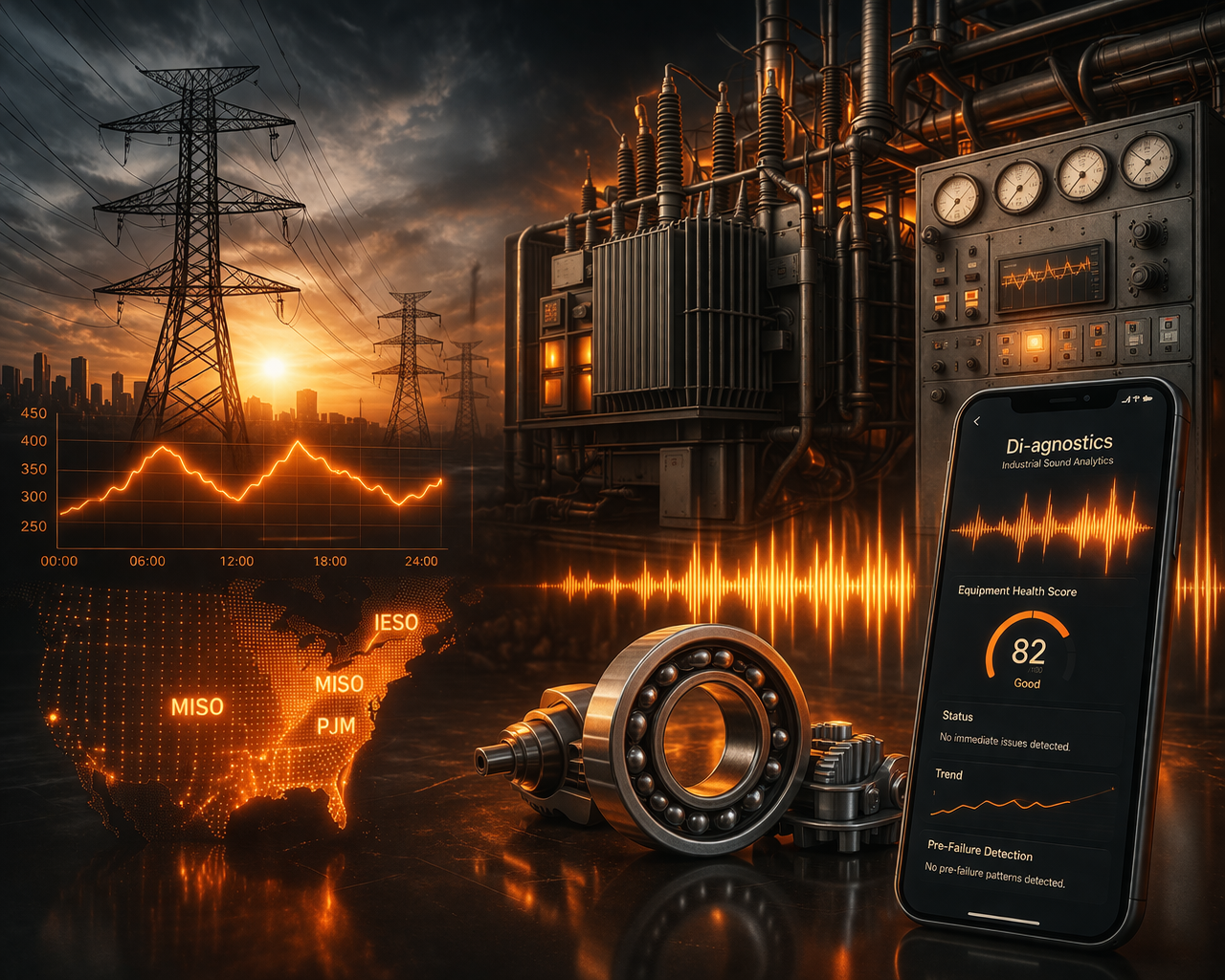
1. Operational Scale
We now generate 400+ electricity consumption forecasts daily, all delivered under operational constraints with a deadline of 9 AM (in different time zones) each day, ensuring direct usability for trading and planning workflows.
It is a production-grade system, running continuously since 2018 as part of our Pro-gnostics service.
The entire process is executed through fully automated forecasting pipelines, covering Ukraine’s and North American electricity markets, including multiple zones:
- IESO;
- MISO;
- PJM.
Each forecast is treated as an independent operational unit, yet orchestrated within a unified system capable of handling scale, reliability, and time sensitivity.
2. Forecasting System (Pro-gnostics)
At the core of Pro-gnostics lies a design decision that fundamentally differentiates it from typical forecasting platforms. Instead of relying on a single global model, we employ a per-forecast modeling architecture.
Each of the 400+ daily forecasts:
- has its own dedicated model;
- is optimized for local consumption dynamics;
- reflects the specific behavior of its zone or customer/enterprise.
This approach allows us to capture micro-patterns that are systematically lost in aggregated or globalized modeling strategies.
For every forecast, the system performs:
- automated feature selection;
- evaluation across weather variables and lagged consumption signals;
- continuous assessment of feature contribution to forecast accuracy.
This results in a dynamic feature set, tailored daily for each individual forecast and effectively turns the system into a daily large-scale optimization engine, rather than a static modeling pipeline.
3. Industrial Sounds Analytics (Di-agnostics)
In parallel with forecasting, we continue advancing Di-agnostics, our industrial AI system focused on equipment health monitoring.
Di-agnostics operates on sound as a primary signal, enabling:
- non-invasive diagnostics;
- applicability in environments where traditional sensors are limited, unavailable or extremely costly.
The current implementation enables Offline Analysis with some limitations, but it is production version 1.0.
We continue working on Equipment Health Score:
- a normalized indicator of current condition;
- designed for intuitive interpretation in operational contexts and equipment;
- suitable for integration into maintenance workflows.
Beyond current state estimation, Di-agnostics targets early detection of failure patterns. By analyzing deviations in acoustic signatures, the system identifies:
- emerging anomalies;
- subtle degradation trends;
- patterns historically associated with failures.
The approach has been validated on historical industrial datasets, confirming its ability to detect signals preceding actual breakdowns.
Conclusion — scaling precision systems rather than simplifying them.
- In Pro-gnostics, this means embracing per-forecast complexity to achieve higher accuracy and adaptability at scale.
- In Di-agnostics, it means extracting actionable intelligence from unconventional data sources, where the main is sound.
Industrial AI systems should not generalize prematurely — they should specialize, adapt, and evolve continuously.


